- Published on
What Would David Lynch Do?
- Authors

- Name
- Emir Mujcevic
- @em____97
Introduction
I recently watched David Lynch: The Art Life, and it stayed in my head longer than I expected.
It’s not really a traditional documentary, because it doesn’t try to explain his work or guide you through his films in a structured way. Instead, it just follows him talking, painting, and reflecting on his early life, moving through memories that feel small and random at first but slowly begin to connect into something more meaningful.
What makes it interesting is that by the end, you don’t feel like you’ve learned how he makes films, but you start to understand where his ideas come from.
Watching it now, in the middle of everything happening with AI, felt strangely disconnected from how we approach creativity today.
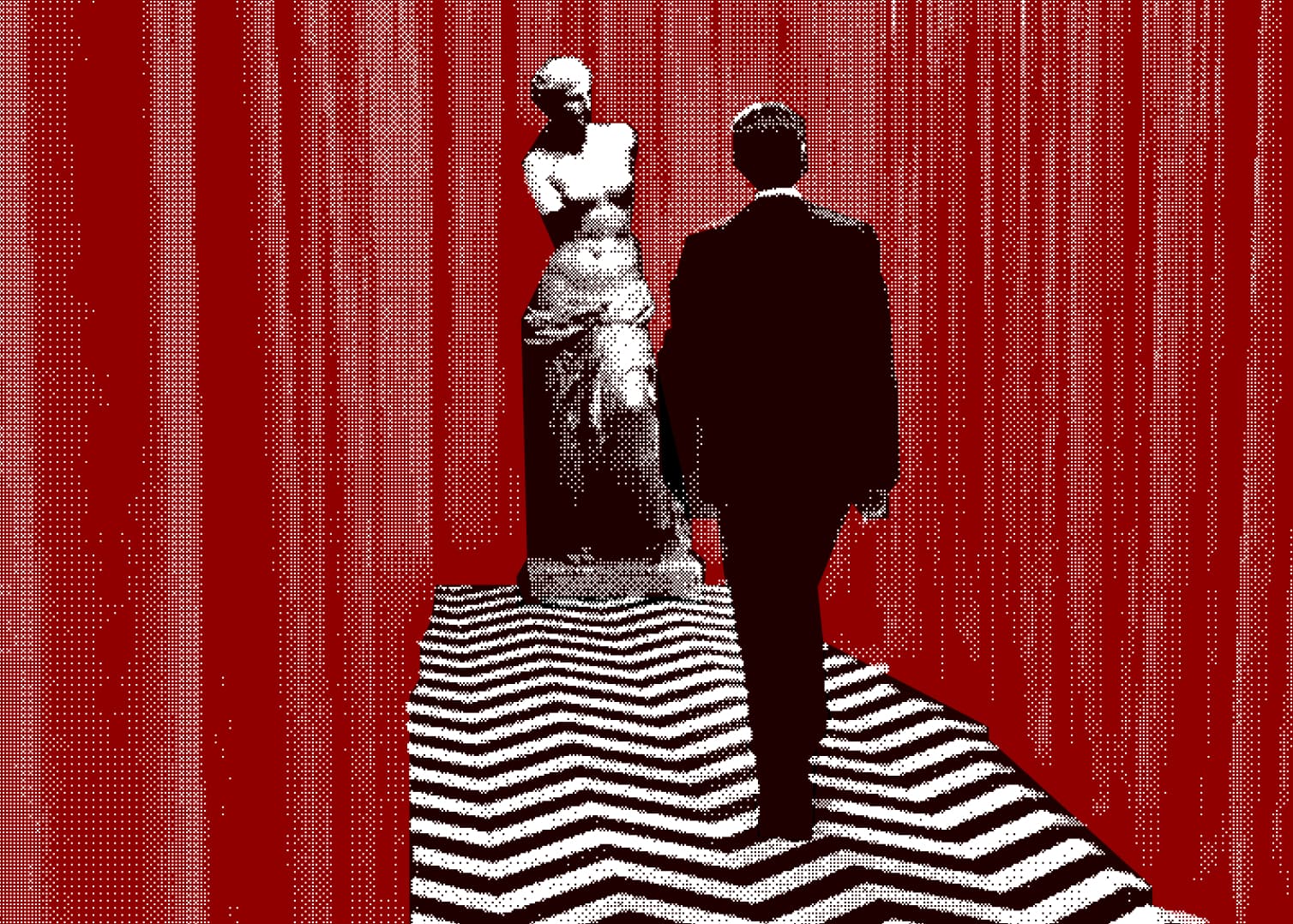
Ideas take time
There’s a quote he says that has been stuck in my head ever since:
Ideas are like fish. If you want to catch little fish, you can stay in the shallow water. But if you want to catch the big fish, you’ve got to go deeper. Down deep, the fish are more powerful and more pure. They’re huge and abstract. And they’re very beautiful.
It sounds simple, but the more you think about it, the more it reveals about his process.
The important part is not really the fish, but the act of going deeper, because that implies time, patience, and a willingness to sit with something that doesn’t fully make sense yet. It means not rushing to solve an idea too quickly, and instead allowing it to grow into something more complex and personal.
AI changes the starting point
This is where it starts to feel very different from how we use AI.
Today, you rarely begin with nothing. You start with a prompt, and within seconds you are given something that already looks finished or at least close to it. From there, the process becomes about refining, selecting, and adjusting rather than searching.
In a way, the idea is presented to you before you’ve had the chance to discover it yourself.
And while that can be incredibly useful, it also changes your relationship to what you’re creating, because you are no longer developing the idea from within, but interacting with something that already exists outside of you.
Small fish and big fish
If you look at it through Lynch’s metaphor, most AI outputs feel like the “small fish.”
They are clear, functional, and easy to work with. They solve problems quickly and often look polished enough to use immediately.
But they rarely stay with you.
The “big fish” are different, because they are harder to define and often a bit uncomfortable at first. They don’t fully explain themselves, and that’s exactly why they feel more interesting and more personal.
When you think about films like Mulholland Drive or Eraserhead, they don’t feel like something that was optimized or generated to fit expectations. They feel like something that emerged slowly, through a process that allowed space for uncertainty.
Where AI actually fits
I don’t think the conclusion is that AI should be avoided.
That would ignore how useful it can be, especially when it comes to exploring ideas, visualizing concepts, or testing different directions quickly.
But it probably matters when you bring it into the process.
If you start with AI, it can define the direction too early and limit how far you go on your own. But if you already have something in your mind, even if it’s incomplete or unclear, AI can help you explore it further and push it into areas you might not have reached by yourself.
In that sense, it works better as a tool for expansion rather than a starting point.
What gets lost
The part that feels easiest to lose is the ability to stay with something that isn’t working yet.
Once you get used to instant results, it becomes harder to tolerate that phase where an idea is still forming and doesn’t have a clear direction. But that phase is often where the more interesting work begins, even if it feels slow or frustrating at the time.
If that disappears, the work might become faster and more efficient, but it also risks becoming less personal.
So what would he do?
It’s hard to imagine someone like Lynch approaching AI in a conventional way.
He probably wouldn’t use it to generate ideas or to speed up his process, but it’s easy to imagine him using it as a tool to experiment, to test unusual combinations, or to look for something unexpected.
Not to replace the process, but to add another layer to it.
Conclusion
AI itself isn’t the problem.
What it changes is how quickly you move past the early stages of an idea.
It makes it easier to stay at the surface, because the surface already looks good enough.
But if you want to go deeper, that still requires the same things it always did: time, attention, and a willingness to not fully understand what you’re doing at the beginning.
And that part hasn’t changed.
Thank you for reading.
Yours truly,
Emir
P.S.
I haven’t been writing much recently because of some life updates, mainly moving into a new flat and starting a new job, which took most of my focus over the past months.
But I’m getting back into it now, and I’ll be active again soon. I also can’t wait to show some of the new projects I’ve been working on.